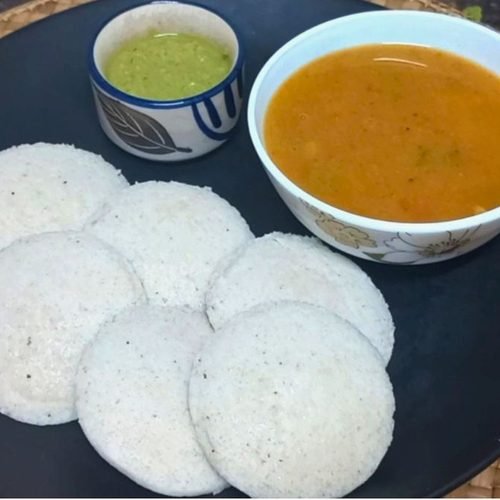
Soft & Spongy Jowar Idli Recipe – Healthy Millet Breakfast

Learn how to make soft and spongy jowar idli without rice. This healthy millet idli recipe uses jowar, urad dal, chana dal and poha.
Ingredients
- ½ cup Jowar
- 3 tbsp Urad Dal
- 3 tbsp Chana Dal
- ¼ cup Poha
- ½ tsp Methi Seeds
- ¼ tsp Salt
Instructions
Soak the Ingredients
- Add jowar, urad dal, chana dal, poha and methi seeds to a large bowl. Wash everything 2–3 times with water.
- Add enough water to keep approximately 1 inch of water above the ingredients. Cover and soak for 4–5 hours.
Grind the Batter
- After soaking, the grains and dals will swell. Strain the excess water.
- Transfer the soaked mixture to a grinder jar and add 2 ice cubes.
- Grind into a smooth, thick batter. Add 2–3 tablespoons of water if required while grinding.
- The exact amount of water can vary depending on the ingredients and soaking conditions, so avoid adding too much at once.
Whisk the Batter
- Transfer the batter to a large bowl. Now comes an important step for fluffy idlis.
- Whisk the batter continuously for around 4–5 minutes.
- You will notice that the batter becomes lighter in colour and slightly airy.
- This simple step helps incorporate air into the batter and can contribute to a lighter texture.
Ferment the Batter
- Cover the bowl and leave the batter to ferment. During warm weather, it may take around 8–10 hours.
- In colder weather, fermentation may take around 12–14 hours or longer, depending on room temperature.
- The batter should look slightly risen and bubbly when properly fermented.
Add Salt
- Once fermented, gently mix the batter. Add approximately ¼ tsp salt and mix again.
- Avoid aggressively stirring the batter because you don't want to knock out all the air.
Steam the Idlis
- Grease the idli moulds lightly with oil. Pour the batter into the moulds, leaving some space at the top because the idlis will expand while steaming.
- Place the moulds in a preheated steamer with boiling water. Cover and steam for approximately 12–13 minutes.
Demould
- After steaming, check an idli by lightly touching the surface. If it doesn't feel wet or sticky, the idlis are ready.
- Remove the trays and allow them to rest for 1–2 minutes. Gently remove the idlis from the moulds.
- You should have soft, fluffy and spongy jowar idlis ready to serve.
Video
Notes
1. Proper soaking makes the ingredients easier to grind and helps produce a smoother batter.
2. Don't make the batter too thin. The batter should be thick but pourable.
3. Adding 2 ice cubes while grinding can help prevent the batter from getting excessively warm during grinding.
4. Whisking the batter for 4–5 minutes is one of the key steps in this recipe.
5. Fermentation time depends heavily on the room temperature.
6. Leave some space because the idlis will rise during steaming.
7. Steaming for too long can make idlis dry or rubbery.